Homeowners spend an average of $2,500 per year on energy bills, with heating and cooling accounting for roughly half (U.S. Energy Information Administration). That makes HVAC energy efficiency marketing one of the highest-opportunity content strategies available to contractors. Yet most HVAC companies treat energy efficiency as a bullet point on a service page rather than what it really is: a content engine that attracts, educates, and converts homeowners at every stage of the buying journey.
At Premier Code, Inc., we build HVAC websites designed to turn technical expertise into measurable leads. Energy efficiency content is one of the most effective tools in that system because it directly addresses the questions homeowners are already asking. This article breaks down why it works, what to publish, and how to structure it so education leads to conversion.
Why HVAC Energy Efficiency Marketing Outperforms Traditional Service Pages
Standard HVAC service pages target homeowners who already know what they need — a small slice of the market. Energy efficiency content captures a much larger audience: homeowners who know they have a problem (high bills, uneven temperatures, aging equipment) but haven't yet decided on a solution.
Google Trends shows searches for "how to lower energy bills" and "energy efficient HVAC" have grown 34% year-over-year since 2023, with sustained peaks during both heating and cooling seasons. The Inflation Reduction Act and its successor programs have driven a 67% increase in heat pump installations since 2022 (Air-Conditioning, Heating, and Refrigeration Institute), creating a wave of homeowners actively researching efficiency upgrades.
Here's what makes energy efficiency content strategically different:
- Longer time on site: Educational content averages 3-4 minutes of engagement versus 45-60 seconds for service pages, signaling quality to search engines
- Higher share rate: Homeowners share money-saving tips with neighbors, spouses, and social networks — extending your reach organically
- Lower keyword competition: "How to improve home energy efficiency" is far less competitive than "AC repair near me," making it easier and cheaper to rank
- Trust building: A company that teaches you how to save money earns more trust than one that only asks for your business
The Five Content Pillars of HVAC Energy Efficiency Marketing
Effective energy efficiency content isn't random blog posts about "saving energy." It's a structured system built around the topics homeowners search for most — organized to guide them from awareness to action.
Pillar 1: Cost Education — Show Them the Numbers
Homeowners respond to specific dollar amounts, not vague promises. Content that quantifies energy costs and potential savings outperforms generic advice by a wide margin.
High-performing topics in this pillar include:
- "What Does It Cost to Run Your AC for a Month?" — Break down the math using local utility rates and common system sizes. A 3-ton AC unit running 8 hours per day at $0.16/kWh costs approximately $115/month. That specificity builds credibility.
- "How Much Can a New HVAC System Save You Per Year?" — Compare a 10 SEER system (common in homes built before 2006) to a 16+ SEER replacement. The difference is typically $400-$700 in annual energy savings, which reframes the purchase as an investment rather than an expense.
- "Energy Audit Results: What We Find in Most Homes" — Share anonymized data from real inspections. "In 73% of the homes we inspect, ductwork leaks waste 20-30% of conditioned air." Original data is the strongest differentiator in content marketing.
Pillar 2: Equipment Comparisons — Guide the Research Phase
When homeowners start comparing systems, they're weeks from a purchase decision. Comparison content positions your company as the expert who helps them choose.
- SEER rating explainers: What SEER2 means in 2026, why minimum standards increased to 15 SEER2 for northern regions and 16 SEER2 for southern regions, and what the real-world difference is between a 16 and a 20+ SEER2 system
- Heat pump vs. furnace breakdowns: With heat pump technology advancing rapidly, homeowners in moderate climates face a genuine decision. Content that honestly presents pros, cons, and cost scenarios earns trust and leads.
- Ductless vs. ducted systems: Mini-split searches have grown steadily as homeowners add conditioned space to garages, additions, and homes without ductwork
- Variable-speed vs. single-stage: Explain how variable-speed compressors reduce energy use by 25-40% compared to single-stage systems, and when the premium is worth it
"The HVAC companies generating the most leads from content aren't writing about themselves — they're answering the questions homeowners type into Google at 11 PM when they're worried about their energy bill. Be the company that shows up with a clear, honest answer, and you'll be the company they call when it's time to buy."
Pillar 3: Rebates and Incentives — Remove the Price Barrier
Federal and state incentives have never been more generous, and most homeowners don't know what's available. Content that maps out rebates reduces the perceived cost of upgrading and positions your company as the contractor who knows the landscape.
In 2026, homeowners can access:
- Federal tax credits up to $2,000 for qualifying heat pump installations under the Inflation Reduction Act (extended through 2032)
- Home Efficiency Rebates (HOMES program): Up to $8,000 for low-to-moderate income households achieving significant energy reduction
- State and utility rebates: Varying by location, often stackable with federal credits — some homeowners can offset 50-70% of installation costs
Create a dedicated rebates page and update it quarterly. This single page can become one of your highest-traffic assets because the information changes frequently and homeowners return to check updates. Link it from every equipment comparison article and service page involving system replacement.
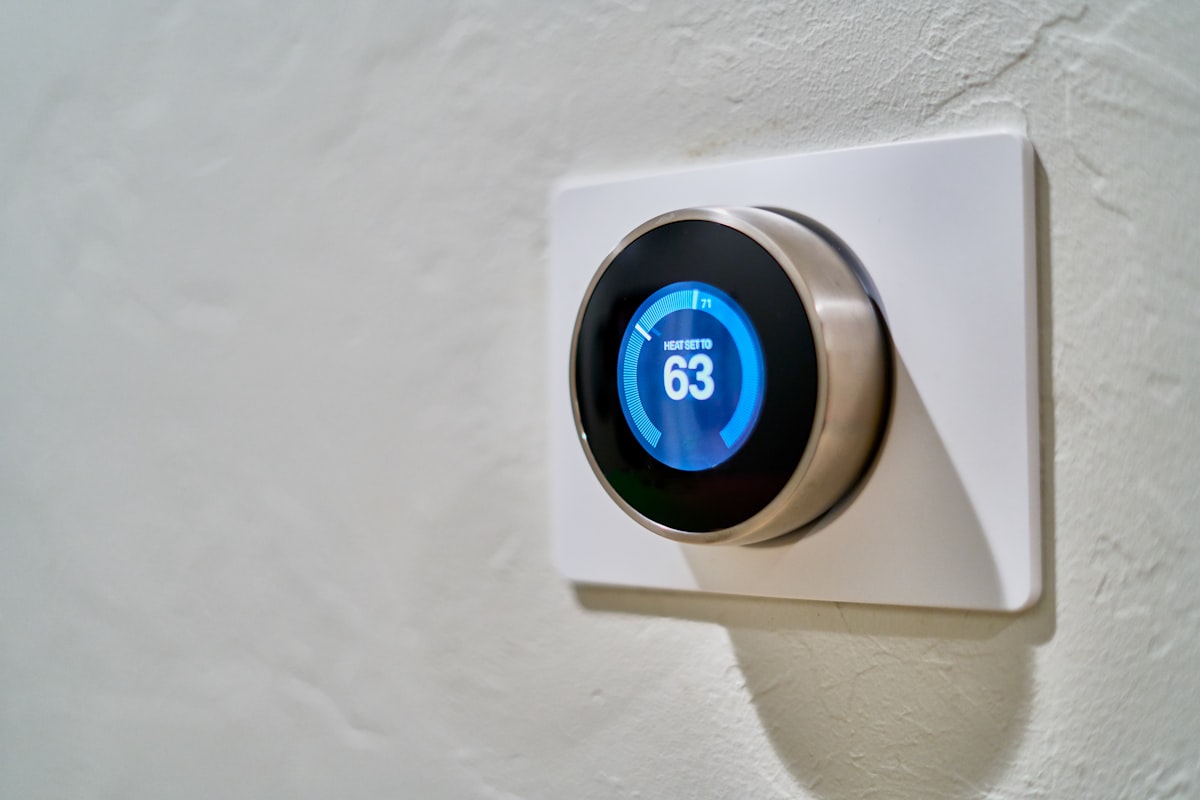
Pillar 4: Seasonal Efficiency Guides — Content That Recurs Annually
Energy efficiency concerns peak twice a year: when the first summer electric bill arrives and when the first winter gas bill lands. Seasonal HVAC marketing and energy efficiency content align naturally — publish tips before each season's demand spike, and the content works year after year.
- Spring: "10 Ways to Cut Your Summer Cooling Costs Before June" — filter changes, thermostat programming, shade strategies, duct sealing, and tune-up scheduling
- Fall: "Winterize Your HVAC: A Homeowner's Energy Efficiency Checklist" — furnace inspection, weather stripping, insulation checks, and programmable thermostat setup
- Year-round: "The $50 Fix That Can Cut Your Energy Bill 15%" — seal and insulate ductwork, the single highest-ROI improvement for most homes
These checklist-style articles consistently earn featured snippets in Google because they directly answer common search queries in a structured format.
Pillar 5: Indoor Air Quality and Comfort — Expand the Conversation
Energy efficiency is the entry point, but comfort and health close the sale. Homeowners researching energy savings also care about humidity control, air filtration, and consistent temperatures. Content bridging efficiency and comfort broadens your keyword footprint and increases the services you can sell.
- How proper sizing affects both energy use and comfort (oversized systems cycle too frequently, creating humidity problems and hot/cold spots)
- Why sealing ductwork improves air quality as well as efficiency
- The relationship between insulation, HVAC load, and consistent room temperatures
- How ERVs (energy recovery ventilators) provide fresh air without wasting conditioned air
"Energy efficiency content is a business model shift. When you educate homeowners on efficiency, you stop competing on price for emergency repairs and start selling high-margin system upgrades, maintenance agreements, and whole-home comfort solutions. The content does the selling before your tech ever walks through the door."
How to Structure Energy Content for Conversion
Educational content that doesn't convert is a public service announcement. Here's how to structure energy efficiency content to guide readers toward action without feeling like a sales pitch.
The Educate-Quantify-Offer Framework
- Educate: Lead with genuinely useful information. Explain how SEER ratings work, what causes high energy bills, or how duct leaks waste money. Earn their attention by giving real value.
- Quantify: Attach specific dollar amounts to the problem and the solution. "A duct system leaking 30% of conditioned air costs the average homeowner $400-$600 per year in wasted energy." Numbers make abstract problems concrete.
- Offer: Present your service as the logical next step and a natural conclusion. "We include a duct leakage test with every system evaluation. Schedule yours to find out exactly where your energy dollars are going."
Conversion Elements That Work in Educational Content
The most effective conversion elements within educational content include:
- Inline calculator widgets: "Enter your system age, square footage, and current SEER rating to estimate your annual savings." Interactive tools increase time on page and capture contact information naturally.
- Contextual CTAs: Place calls to action where they're relevant, throughout the piece. After explaining duct leakage, offer an inspection. After comparing SEER ratings, offer a system evaluation.
- Social proof: "Last year, we helped 127 homeowners in [service area] upgrade to high-efficiency systems, saving an average of $540 per year." Data-backed testimonials within educational content convert better than standalone review pages.
- Downloadable resources: Energy efficiency checklists, rebate guides, and cost comparison worksheets gated behind email capture — building your retargeting list from educational traffic
Measuring the Impact of Energy Efficiency Content
Track these metrics to ensure your energy content strategy is generating business as well as traffic:
- Assisted conversions: In GA4, check whether energy efficiency pages appear in the conversion path even when they're not the last click. Educational content often initiates the journey that a service page completes.
- Maintenance agreement signups from content readers: Homeowners who engage with efficiency content are the ideal maintenance agreement prospects — they've already demonstrated they care about system performance and cost savings
- Average project value by lead source: Energy efficiency content typically generates leads with 30-50% higher average project values than emergency repair leads, because these customers are planning upgrades rather than reacting to breakdowns
- Keyword ranking velocity: Educational content in the efficiency space often ranks faster than commercial pages because competition is lower and engagement signals are stronger
Start With What You Already Know
The best energy efficiency content comes from your own field experience. Your technicians see the same problems daily — aging equipment running at 60% efficiency, ductwork held together with tape, thermostats programmed to waste money. That first-hand expertise is exactly what homeowners search for, and no national content farm can replicate it.
Start with three pieces: one cost-focused article using real numbers from your service area, one equipment comparison reflecting the systems you install, and one seasonal efficiency guide timed to your next peak season. Publish them on a professionally built HVAC website with proper schema markup, fast load times, and clear conversion paths — and you'll have a content engine that generates leads for years.
Not sure whether your current website supports energy efficiency content that ranks and converts? Get your free website audit from Premier Code and we'll evaluate your content structure, technical SEO foundation, and conversion pathways with specific recommendations for building an education-driven lead generation strategy.