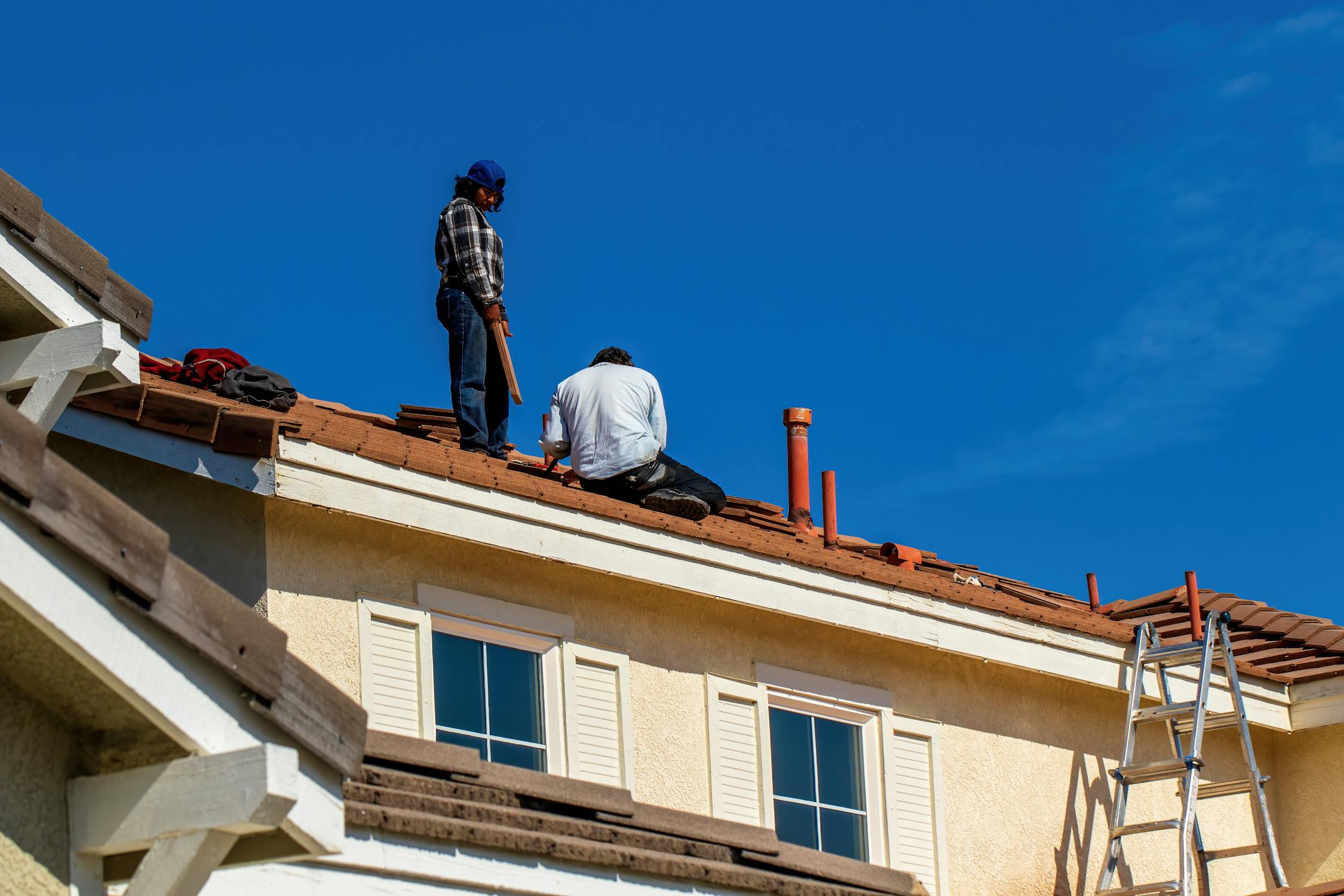
Every spring, the same pattern repeats across the South and Midwest: severe weather rolls through, shingles litter front yards, and within 48 hours, unmarked trucks flood neighborhoods with crews knocking doors and promising free inspections. Storm chasers — out-of-town contractors who follow weather patterns from state to state — collect deposits, deliver substandard work, and disappear before homeowners realize the warranty they were handed is worthless. If you're a local roofer watching this happen in your market, the question isn't whether you can beat storm chasers roofing for your community's business. It's whether you've built the online presence that makes winning automatic.
The answer for most local contractors is: not yet. But the structural advantages you already have — real roots in the community, verifiable credentials, years of local project history — become an unbeatable competitive weapon when they're visible online. At Premier Code, Inc., we build professional roofing websites designed to convert those advantages into booked jobs, especially during the post-storm window when homeowners are making fast, high-stakes decisions.
The Storm Chaser Playbook — and Why It Has an Expiration Date
Storm chasers have one strategy: speed. They arrive within 24 to 48 hours of a major hail or wind event, canvass door-to-door, and pressure homeowners into signing before the shock wears off. The Better Business Bureau warns consumers about this every storm season, noting that out-of-town contractors frequently lack local licensing. The FBI estimates insurance carriers pay at least $1 billion annually on fraudulent roof claims, and storm chaser activity increases 400% after major weather events.
But their speed advantage has a fatal weakness: they have zero local digital footprint. No Google Business Profile with years of reviews. No website ranking for "[your city] roof repair." No presence in the Local 3-pack that tops 93% of local searches. They can knock on a door, but they can't show up when a homeowner types "roofer near me" into their phone.
The 2025 Homeowner Roofing Survey found 62% of homeowners use search engines to find roofers — a percentage that spikes after storms. The 2026 BrightLocal Consumer Review Survey showed 97% of consumers read reviews, 47% won't use a business with fewer than 20 reviews, and 74% only trust reviews from the last three months. A storm chaser who arrived yesterday cannot manufacture any of that.
How to Beat Storm Chasers Roofing: Build What They Can't Fake
The storm chaser problem is ultimately a trust problem. Nearly 70% of homeowners worry about unreliable contractors, and 41% report having been deceived by a service provider in the past. After a storm, that anxiety intensifies. Homeowners are looking for proof that the company they hire will still exist six months from now.
Your local web presence is that proof. Here's how to build it systematically:
1. Own the Google Local Pack Before Storm Season
The Google Local 3-pack captures 44% of all clicks on local search results, and 68% of consumers trust Local Pack listings over any other result type. If you're in the top three when a homeowner searches "roof repair near me" after a hailstorm, you've won the trust battle before they visit your website.
What gets you there:
- A fully completed Google Business Profile. Complete profiles are 2.7x more likely to be perceived as reputable. Include every service category, accurate hours, emergency availability, service area, and your website link.
- Consistent review velocity. Five new reviews per month compounds to 60+ annually — a profile storm chasers can't replicate.
- Recent project photos. Upload before-and-after images monthly. Homeowners scanning the Local Pack see real projects in their community from a company they can verify.
- Active posts. Regular Google Business Profile posts signal to both the algorithm and consumers that your business is engaged. During storm season, post community updates and inspection availability.
2. Build a Website That Answers Every Question
Your website is the next trust checkpoint. Research shows 75% of consumers judge credibility based on website design, and 84% consider a website more credible than a social media page. A storm chaser typically has no website or a generic template with a different phone number for every city. Your site should make the contrast obvious.
Essential pages for storm season competitiveness:
- Dedicated storm damage service pages targeting geo-modified keywords like "hail damage roof repair in [Your City]." With 46% of Google searches carrying local intent, these pages capture traffic storm chasers can't compete for.
- An insurance claims resource center. A page explaining the claims process, your documentation support, and typical timelines positions you as a guide through it.
- A verifiable credentials page. License number, insurance carrier, manufacturer certifications (GAF Master Elite, CertainTeed SELECT ShingleMaster), and years in business — everything a storm chaser can't show.
- A portfolio of local work. Before-and-after photos organized by project type with city, scope, and timeline. See our guide to creating a roofing portfolio that sells.
"Storm chasers compete on speed — showing up before you've had time to think. Local roofers compete on trust — showing up in search results with years of reviews and verified credentials. When a homeowner has both options, trust wins every time."
3. Dominate Mobile Search — It's the Post-Storm Battleground
Over 70% of home service inquiries come from mobile devices, and that percentage climbs during emergencies. After a storm, homeowners are standing in their yards, phone in hand, searching for help. Google's data shows 78% of local mobile searches result in a purchase within 24 hours, and 76% of "near me" searches lead to a business visit within one day.
Your website needs to load in under two seconds on mobile with a click-to-call button in the header and a simple storm damage inspection form — name, address, phone, damage type. Every extra second of load time and unnecessary form field costs you leads that storm chasers are capturing with a door knock.
4. Build Your Review Profile Year-Round
Reviews are where the storm chaser advantage collapses entirely. The 2025 Homeowner Roofing Survey found 67% of homeowners rate reviews as "very" or "extremely" important when selecting a roofer, and the 2026 BrightLocal survey showed 68% of consumers require a minimum of 4 stars. Consumers read an average of 10 reviews before choosing.
A storm chaser who arrived yesterday has zero reviews in your market. Build an insurmountable lead:
- Systematize collection. Send every customer a direct Google review link within 48 hours of job completion.
- Respond to every review — positive and negative — with personalized replies. Consumers are 80% more likely to use businesses that respond to all reviews, and 50% are deterred by generic responses.
- Feature reviews on your website. Pull your best Google reviews onto your homepage and service pages with real names and project details.
- Never stop. 74% of consumers only trust reviews from the last three months. A stale review profile hands the advantage back to whoever is marketing most actively.
The Economics: Why This Investment Pays for Itself
U.S. roof insurance claims reached nearly $31 billion in 2024, a 30% increase since 2022, with 22% of all roofing projects resulting from storm damage. The average replacement costs $10,000 to $11,000. Every storm lead your website captures instead of a storm chaser represents significant revenue — plus a review, a referral, and a potential maintenance customer.
Consider the math: if your local web presence captures just five additional storm damage leads per severe weather event — leads that would have otherwise gone to door-knocking storm chasers — that's $50,000 to $55,000 in revenue per storm. In storm-prone markets with multiple events per year, a professionally built roofing website with strong local SEO pays for itself after a single weather event.
"The roofer who invests in their online presence before storm season answers the phone when severe weather hits. The storm chaser is still knocking on doors while the local contractor's website is already converting the homeowner who searched 'roof repair near me' five minutes after the hail stopped."
Your Storm Season Action Plan
You don't need to build everything at once. Here's a prioritized roadmap that builds your competitive moat against storm chasers before the next severe weather season:
Immediate (This Week)
- Audit your Google Business Profile. Is every field completed? Do you have photos from the last 30 days? Is your phone number correct and click-to-call on mobile?
- Send review requests to your last 10 completed jobs. Even 5-7 new reviews this week improves visibility and credibility.
- Check your website on your phone. Can you call with one tap? Can you find your license number? If it takes more than three seconds to load, it's costing you leads.
Within 30 Days
- Create or update storm damage service pages. Dedicated pages for hail damage, wind damage, emergency tarping, and insurance claim assistance — each targeting your city name.
- Implement a review collection system. Automate the process: completed job triggers a text or email with your direct Google review link within 48 hours.
- Add a credentials section to your website. License number, insurance verification, manufacturer certifications, years in business, community involvement — everything a storm chaser can't show.
Before Storm Season
- Prepare emergency website messaging. Build a banner template you can activate within hours of a major storm: free inspection offer, emergency contact, insurance guidance link.
- Publish educational content. Articles on identifying damage, understanding claims, and vetting contractors. Content published before demand spikes ranks when homeowners need it — the principle behind effective ethical storm damage marketing strategies.
- Build your portfolio. Document every project with before-and-after photos, city name, and scope of work — visual proof no storm chaser can replicate.
The Permanent Advantage
Storm chasers have a fundamental business model problem: they leave. They can't build reviews in your market because they don't stay. They can't rank in local search because they have no verified local presence. They can't demonstrate years of community trust because they were in a different state last month.
Every month you invest in your local web presence — adding reviews, publishing content, documenting projects — widens the gap between you and the next storm chaser with a clipboard and a temporary phone number. Year two, you start storm season with more reviews, stronger rankings, and deeper authority. The storm chaser starts from zero, every single time.
That's not a competition. That's an inevitability — but only if you build the presence now.
Ready to see how your current online presence stacks up against storm chasers in your market? Get your free website audit from Premier Code and we'll evaluate your local search visibility, review profile, mobile performance, and storm readiness with specific recommendations to turn your local advantage into booked jobs.