Nearly half of all U.S. households now have at least one smart home device, and that number is climbing fast. The smart home installation services market is projected to grow from $40 billion in 2025 to $176 billion by 2034, and the professionals installing this technology are overwhelmingly electricians. If you're running an electrical business and haven't added smart home electrician services to your offerings, you're watching one of the most significant revenue opportunities in the trade pass you by.
At Premier Code, Inc., we build websites for electrical contractors and track how emerging service categories drive lead generation. This guide breaks down the real numbers behind smart home services, the highest-return offerings, and how to position your business to capture this demand.
Why Smart Home Electrician Services Are the Fastest-Growing Revenue Stream
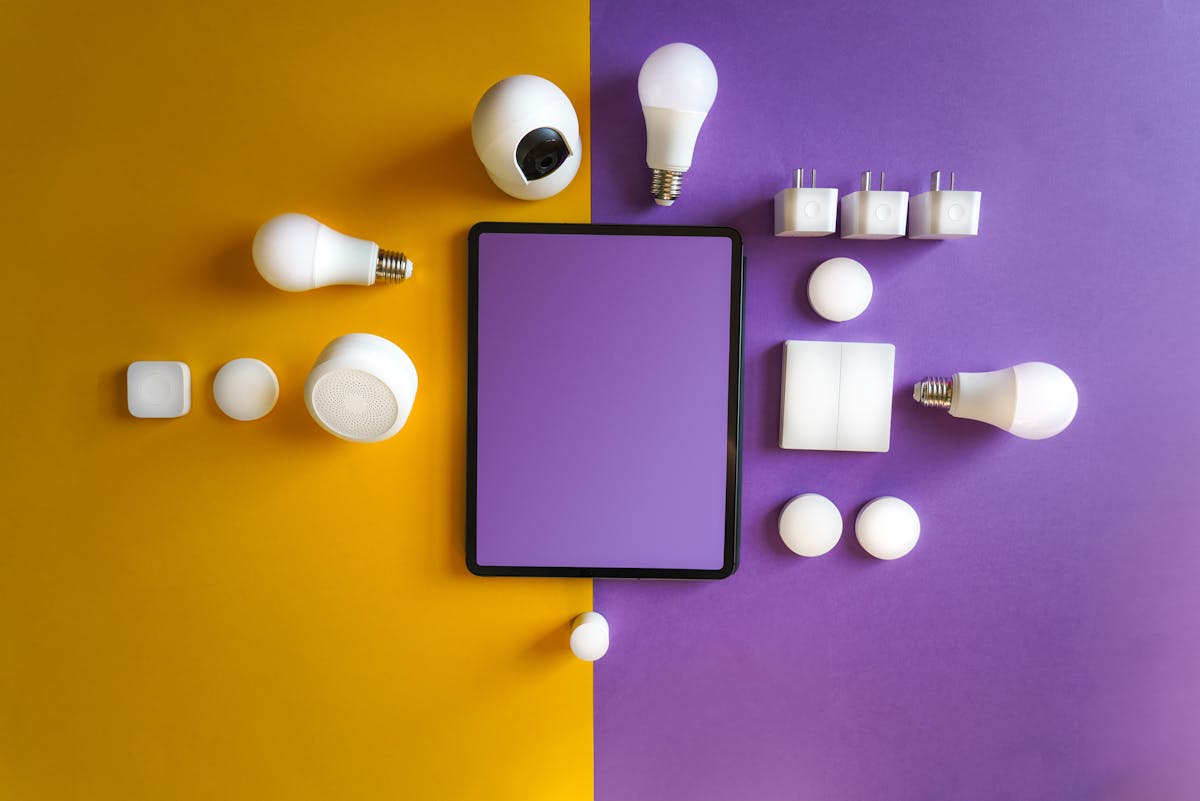
The U.S. smart home market reached $54.5 billion in 2026, growing at over 21% annually. The number that matters most for electricians: 77 million U.S. homes already have smart devices, and homeowners who want to go beyond plug-and-play speakers need a licensed electrician to do it properly.
Smart lighting requires neutral wire connections many older homes lack. Whole-home automation demands dedicated circuits, structured wiring, and panel capacity. These aren't DIY projects — they're skilled electrical work.
The average residential service call generates $200 to $500. A mid-range smart home installation generates $4,000 to $6,000. A full hardwired system runs $8,000 to $15,000+. That's the kind of per-job revenue that changes your business trajectory.
The Six Smart Home Services That Generate the Most Revenue
Not all smart home work is created equal. These six service categories consistently produce the highest revenue per project and the strongest repeat business for electrical contractors.
1. Smart Lighting Systems and Controls
Smart lighting is the gateway service — the one most homeowners ask about first. It ranges from simple smart switch replacements ($150-$300 per switch installed) to whole-home lighting control systems using Lutron Caseta, Lutron RadioRA 3, or Control4 ($3,000 to $15,000+ depending on home size).
The revenue multiplier here is scope creep — in a good way. A customer who calls about smart switches in their living room often upgrades to the entire first floor once they see the result. Electricians who demonstrate the technology during the initial installation close upsells on 60-70% of lighting jobs.
2. Structured Wiring and Network Infrastructure
Every smart home runs on its network, and Wi-Fi alone doesn't cut it for serious automation. Structured wiring — Cat6A ethernet, coax, and low-voltage cabling — is a high-value service electricians are uniquely positioned to provide. New construction packages run $2,000 to $5,000; retrofitting existing homes costs $3,000 to $10,000.
With Matter now supported by over 750 products and Thread-based mesh networking becoming the backbone of modern smart homes, reliable wired infrastructure is more important than ever.
3. Smart Panel and Energy Management
Smart electrical panels from Span, Leviton, and Schneider Electric give homeowners circuit-level energy monitoring and remote control. A Span smart panel installation runs $5,000 to $8,000 including panel and labor, and pairs naturally with solar, EV chargers, and battery systems.
If you're already doing EV charger installations, smart panels are a natural upsell — many homeowners need panel capacity management when adding a 240V charging circuit alongside existing loads.
4. Home Security and Surveillance Wiring
While wireless cameras dominate the DIY market, homeowners investing in $5,000 to $20,000 security systems want wired infrastructure for reliability. Running power and data cables to camera mounting points, installing outdoor-rated junction boxes, and ensuring proper circuit protection are all electrical work.
5. Smart Thermostat and HVAC Integration
Smart thermostat installation seems simple, but 30-40% of installations reveal wiring issues — missing C-wires, incompatible low-voltage setups, or multi-zone systems that need additional relays. The thermostat swap itself might be a $200 job, but the wiring corrections and HVAC integration push many projects to $500 to $1,500. For homes with zoned systems, whole-home smart HVAC integration can reach $2,000 to $4,000.
6. Whole-Home Automation Integration
Complete smart home systems integrating lighting, climate, security, audio, and shading under platforms like Control4, Savant, or Crestron range from $15,000 to $100,000+ for luxury homes. Mid-market packages using Home Assistant with professional hardware run $8,000 to $20,000.
"The electricians who are doubling their revenue with smart home services aren't technology geniuses — they're tradespeople who recognized that the same homeowners calling for panel upgrades and outlet additions are now asking for smart lighting, automated shades, and whole-home audio. The work is electrical. The margin is premium."
How to Add Smart Home Services to Your Existing Electrical Business
You don't need to become a Silicon Valley startup to offer smart home services. You need a structured approach that builds on the skills you already have.
Start with What You Know
Smart switches, thermostats, and video doorbells are natural extensions of work you're already doing. Every service call is an opportunity to assess smart home readiness. A customer calling about a flickering light might also need a neutral wire run to support smart switches throughout the house.
Get Certified
Certifications differentiate you from general electricians and justify higher rates:
- CEDIA Certifications: The industry gold standard — IST and CIT certifications signal expertise to high-end clients.
- Lutron Certified Installer: Gets you listed in Lutron's professional directory, a direct referral channel from homeowners.
- Control4 Certified: Opens doors to the dealer network and access to professional-grade hardware not available retail.
- Manufacturer Training: Span, Ring Pro, and Sonos all offer installer programs that add credibility and referral opportunities.
The investment ranges from $500 to $2,000. The return shows up in your first premium project.
Build a Dedicated Service Page
Your website needs a dedicated smart home services page that ranks independently for searches like "smart home installation [your city]" and "smart home electrician near me." List specific services, brands, certifications, and pricing ranges. If your current site can't support this, a purpose-built electrician website with individual service pages will generate significantly more qualified leads.
The Revenue Math: How Smart Home Services Double Your Business
Let's run realistic numbers for a mid-size electrical contracting business.
Current state (traditional electrical only):
- 20 jobs per month at an average of $450 per job
- Monthly revenue: $9,000
- Annual revenue: $108,000
After adding smart home services:
- 15 traditional jobs per month at $450 average: $6,750
- 4 mid-range smart home projects per month at $5,000 average: $20,000
- 1 premium smart home project per month at $12,000: $12,000
- Monthly revenue: $38,750
- Annual revenue: $465,000
That's not doubling — it's more than quadrupling. And these numbers are conservative for electricians in metro areas where smart home adoption is highest. The key insight: you don't need to replace your existing work. You need to layer higher-value smart home projects on top of it.
Margins on smart home work are also substantially better. Homeowners perceive smart home installation as specialized technology work and shop less aggressively on price. Contractors report 20-35% margins on smart home projects compared to 10-15% on standard residential electrical work.
"Every traditional electrical service call is a smart home lead in disguise. The homeowner who calls you to add an outlet in their kitchen is the same person who's been thinking about smart lighting, a video doorbell, or a whole-home sound system. The electricians who ask the right questions during every job are the ones filling their pipeline with $5,000-$15,000 projects."
Marketing Smart Home Services: What Actually Works
Homeowners spending $5,000 to $15,000 on smart home installations research extensively, check credentials, and compare options over weeks. Your marketing needs to meet them where they are.
Content That Captures High-Intent Searches
Create content answering questions smart home buyers search — "smart lighting installation cost," "Lutron vs. Control4 comparison," "smart home wiring for new construction." Each page captures homeowners at the research stage before they've chosen a contractor. Our analysis of common mistakes electricians make with their online presence shows that businesses with individual service pages generate 3-5x more organic leads than those with a single generic services list.
Showcase Completed Projects
Smart home work is inherently visual. Before-and-after photos of wiring jobs, smart panel installations, and lighting systems demonstrate expertise that text alone cannot. Post them on your website, Google Business Profile (businesses with frequent photo updates receive 520% more calls), and social media.
Build Referral Partnerships
Smart home services create natural cross-referral opportunities that traditional electrical work doesn't:
- Home builders and remodelers: Being the recommended electrician for one active builder can generate 2-4 premium projects per month.
- Interior designers: High-end clients expect smart lighting, automated shading, and hidden audio. Designers need reliable installation partners.
- Real estate agents: Agents marketing luxury properties recommend pre-sale smart home upgrades — and need an electrician to execute.
- Solar installers: Smart panels, battery backup, and EV chargers pair naturally with solar. Cross-referral agreements create a steady pipeline.
Google Business Profile Optimization
Add "Home Automation Service" and "Smart Home Installation Service" as secondary categories and list every smart home service with detailed descriptions. This puts you in front of homeowners searching specifically for smart home installation — a less competitive, higher-intent category than generic "electrician near me."
The Competitive Window Is Closing
Most local electrical contractors haven't formalized smart home services — they might install a smart thermostat when asked, but don't market it, certify for it, or build service pages around it. The first electricians in each market who position themselves as smart home specialists will capture a disproportionate share of demand.
This window won't stay open indefinitely. Smart home adoption is projected to reach 69% of U.S. households by 2027. As more electricians enter the space, early-mover advantages in local search rankings, review volume, and referral networks will be increasingly difficult to replicate.
Your Next Step
Adding smart home services isn't a pivot — it's an expansion of work you're already qualified to do, marketed to homeowners willing to pay premium rates. The demand exists today, the margins are better than traditional residential work, and the competitive landscape is still wide open.
Start with a single certification, a dedicated service page, and a plan to mention smart home options during every service call. Within six months, you'll see how these higher-value projects change your revenue trajectory.
Want to see how your current website positions you to capture smart home installation leads? Get your free website audit from Premier Code and we'll evaluate your visibility for smart home searches, your service page structure, and your local search positioning — with specific, actionable recommendations to start generating higher-value leads.