Filing a roofing insurance claim is one of the most stressful experiences a homeowner faces — and one of the least understood. Most homeowners don't know what their policy covers, what documentation they need, or how to push back when an adjuster's estimate comes in low. A roofing insurance claims website that walks homeowners through the process step by step generates leads and builds the kind of trust that turns one-time storm repairs into long-term customer relationships.
At Premier Code, Inc., we build professional roofing websites that convert confused, anxious homeowners into confident customers. This article breaks down exactly how your website can serve as an insurance claims resource center — and why that strategy is one of the highest-ROI investments a roofing contractor can make in 2026.
Why a Roofing Insurance Claims Website Is a Lead Generation Machine
The numbers tell the story. U.S. roof insurance claims reached nearly $31 billion in 2024, a 30% increase since 2022. Approximately 22% of all roofing projects result from storm damage, and the average roof replacement costs $10,000 to $11,000. That's a massive market — and the entry point for most of these jobs isn't a door knock or a yard sign. It's a Google search.
After a storm, homeowners search for two things: a roofer and answers. Queries like "how to file a roof insurance claim" and "what to do if insurance denies roof claim" spike 300% to 500% in the weeks following severe weather. Those informational searches represent homeowners at the beginning of a buying journey — they don't yet have a roofer. The contractor whose website answers their questions becomes the contractor they call.
What Homeowners Actually Need to Know About Insurance Claims
To build a website resource that genuinely helps, you need to understand the pain points homeowners face. These are the most common areas of confusion:
Understanding Policy Coverage
Most homeowners don't read their policy until they need it. Your website should explain in plain language:
- Dwelling coverage — the portion of the policy covering the physical structure, which typically includes the roof unless explicitly excluded
- ACV vs. RCV policies: Actual Cash Value deducts depreciation; Replacement Cost Value covers the full replacement. Most homeowners don't know which they have
- Deductible structures: Many storm-prone states require a separate wind/hail deductible — often 1% to 5% of the home's insured value ($3,500 to $17,500 on a $350,000 home)
- Exclusions: Cosmetic damage exclusions, age-based depreciation, and maintenance-related denials are increasingly common in 2026 policies
The Claims Timeline
Homeowners have no frame of reference for how long the process takes. A clear timeline on your website eliminates anxiety and sets expectations:
- Damage discovery and documentation — Day 1: Homeowner documents visible damage with photos and video
- Claim filing — Days 1-3: Contact the insurance company and file a claim. Most insurers have online portals and mobile apps that streamline this
- Adjuster inspection — Days 7-21: An insurance adjuster visits the property to assess damage. In storm-heavy seasons, this timeline stretches significantly
- Estimate review — Days 14-30: The insurer issues a scope of loss and payout estimate
- Contractor selection and repair — Days 30-90: Homeowner selects a contractor, work is scheduled and completed
- Supplemental claims (if needed) — Days 30-120: If additional damage is discovered during repairs, a supplement is filed with supporting documentation
Publishing this timeline positions you as the expert who understands the entire process, beyond the roofing part. That's the kind of authority that builds homeowner trust online in ways that advertising alone cannot.
How to Structure Your Insurance Claims Resource Center
A single FAQ page isn't enough. The most effective roofing insurance claims websites dedicate multiple pages to the topic, each targeting specific queries at distinct stages of the homeowner's journey:
Page 1: "How to File a Roof Insurance Claim" (Main Guide)
This is your pillar page — a comprehensive guide covering the entire process from damage discovery through final payment. Target keywords like "how to file a roof insurance claim" and "roofing insurance claim process." Include:
- A step-by-step walkthrough with numbered sections
- What documentation the homeowner should prepare before calling their insurer
- What to expect during the adjuster's visit
- How to read and understand the scope of loss document
- When and how to request a re-inspection if the initial estimate is insufficient
Page 2: "What to Do If Your Roof Insurance Claim Is Denied"
Roughly 1 in 5 homeowner claims are initially denied or underpaid. This page should cover:
- Common reasons for denial: cosmetic-only damage, pre-existing conditions, maintenance neglect, missed filing deadlines
- The formal appeals process and how to submit a demand letter
- When to request a second opinion from an independent adjuster
- The role of a public adjuster and when it's worth hiring one
Page 3: "Working With Your Roofer During an Insurance Claim"
This page explains your role — how you document damage, meet with adjusters, prepare scope-of-loss reports, handle supplements, and coordinate timelines. This differentiates you from contractors who just hand the homeowner a quote and wait.
Page 4: FAQ Section
A dedicated FAQ page targets voice search and featured snippets:
- "Does homeowners insurance cover roof replacement?"
- "How long do I have to file a roof insurance claim?"
- "Should I get a roof inspection before calling my insurance company?"
- "Can my insurance company deny a roof claim for age?"
- "Do I have to use the insurance company's preferred contractor?"
Wrap each question-and-answer pair in FAQPage schema markup — Google regularly surfaces these above standard organic listings.
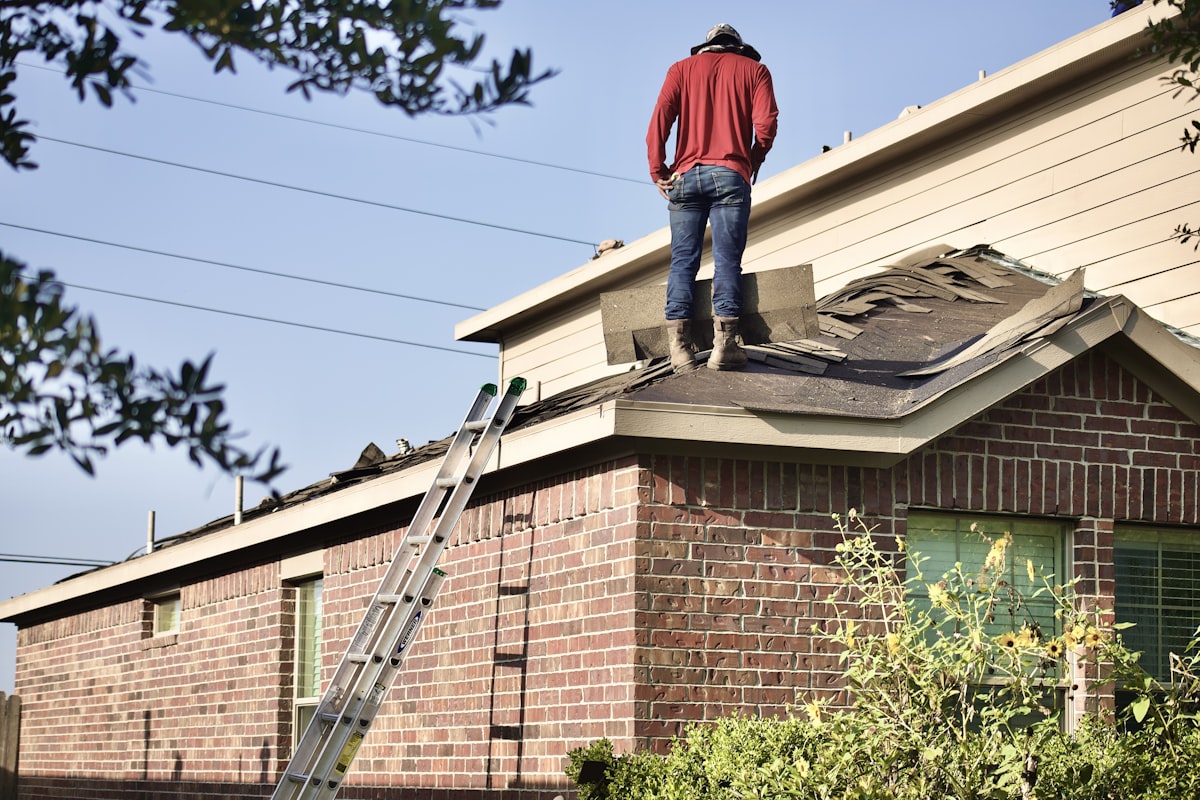
The Contractor's Role: What Smart Roofers Do Differently
The contractors who win the most insurance claim work are good at managing the claims process as well as installing shingles. Your website should communicate these capabilities:
Professional Damage Documentation
The roofer who takes 50 to 100 high-resolution photos organized by roof section and produces a detailed scope-of-damage report using Xactimate or RoofSnap gives the homeowner a dramatically better chance of full approval. Your website should explain this process and show examples — it's one of the strongest differentiators between professional contractors and storm chasers who disappear after collecting a deposit.
Adjuster Meeting Coordination
Many homeowners don't realize they can — and should — have their contractor present during the adjuster's inspection. Your website should emphasize that you attend these meetings as standard service. Experienced contractors point out missed damage, discuss pricing with Xactimate line-item specificity, and ensure the scope of loss reflects actual repair requirements.
Supplement Filing
Initial insurance estimates frequently miss hidden damage discovered once the old roof is removed — damaged decking, compromised underlayment, or code-required upgrades. Filing supplements is where many claims gain 15% to 40% in additional approved value. Your website should explain that you handle supplement documentation as part of your service.
"Homeowners don't want to become insurance experts. They want a contractor who already is one. When your website demonstrates that you understand the claims process inside and out, you're not selling roofing — you're selling peace of mind."
SEO and Content Strategy for Insurance Claims Pages
Building the content is only half the equation. It needs to rank — which means applying deliberate SEO strategy to every page.
Keyword Targeting
Insurance claims content targets a keyword cluster with strong volume and clear intent:
- "How to file a roof insurance claim" — 2,400+ monthly searches
- "Roof insurance claim denied" — 1,600+ monthly searches
- "Does homeowners insurance cover roof replacement" — 3,600+ monthly searches
- "Roofing insurance claim process" — 800+ monthly searches
These informational queries are less competitive than commercial terms like "roof replacement near me" — but they capture homeowners deciding who to trust with a five-figure project.
Local Modifiers
Add geo-modified versions targeting your service area. "How to file a roof insurance claim in [City]" captures hyper-local traffic that national sites can't compete for. Since 46% of all Google searches carry local intent, these modifiers are essential for contractors serving specific markets.
Schema Markup
Implement FAQPage schema on FAQ content and HowTo schema on step-by-step guides. These structured data types increase your chances of appearing in rich results that capture significantly more clicks than standard listings. A professionally built roofing website should have schema markup baked into every template.
Converting Visitors Into Inspections
Educational content brings homeowners to your site. Conversion elements turn them into booked inspections. Every insurance claims page should include:
- A "Schedule Your Free Inspection" form — Five fields maximum: name, address, phone, email, and damage type. Every additional field reduces conversions by roughly 10%
- Click-to-call functionality — Prominent phone number in the header, clickable on mobile. Over 70% of home service inquiries come from mobile devices
- A downloadable checklist — "Your Roof Insurance Claim Checklist" as a PDF captures email addresses while providing genuine value
- Contextual CTAs — Natural mentions within the content like "Not sure if your roof has claimable damage? Schedule a free inspection and we'll document everything for your insurer"
The key is that every CTA feels like the logical next step, not a sales interruption. A homeowner reading about claims who sees "We handle the documentation — schedule your free inspection" is being offered exactly what they need at the right moment.
Real Results: What This Strategy Delivers
Roofing contractors who invest in comprehensive insurance claims content consistently report measurable outcomes:
- Higher lead quality: Homeowners who arrive through educational content are better informed and easier to close because they already trust your expertise
- Reduced sales cycle: When the website pre-educates homeowners, the first conversation focuses on scheduling rather than explaining
- Improved SEO authority: Insurance claims content creates internal linking opportunities across storm damage, inspection, and service pages
- Competitive differentiation: Most roofing websites have a single "Insurance Claims" bullet point. A multi-page resource center positions you as the market authority
In storm-prone markets, this content strategy generates dozens of additional leads per severe weather event — leads that convert at higher rates because homeowners already view you as their insurance claims guide.
Start Building Your Claims Resource Today
You don't need to publish everything at once. Start with the main guide — "How to File a Roof Insurance Claim" — and expand from there. Add the denial page before storm season, the FAQ section within 30 days, and refine based on questions real homeowners ask during inspections. Every page you publish is another entry point for homeowners searching for help and finding you instead of your competitors.
The roofing contractors who thrive in 2026 are good at guiding homeowners through the most confusing part of the process. Your website makes that guidance scalable.
Want to see how your current website handles insurance claims traffic? Get your free website audit from Premier Code and we'll evaluate your content strategy, local search visibility, and conversion infrastructure with specific recommendations to capture more insurance claim leads.